

France's credit rating downgrade: what's next?
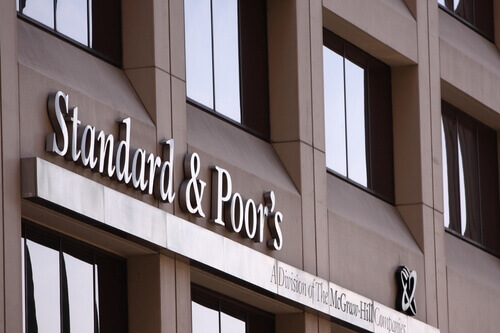
S&P has announced the downgrade of the French credit rating from AA to AA-. Economists do not agree on the potential consequences.
A slow deterioration
For over a decade, a slow and steady erosion has occurred in the perception of France's financial solidity. The negative trend in the country's ratings from rating agencies testifies to this.
In 2012, the loss of the « AAA", the highest possible rating, created a sort of panic within the government of the time. Some observers even suggested that the event cost the then-president, Nicolas Sarkozy, his re-election. The following year, S&P lowered the rating from « AA+ » to « AA » again.
This latter assessment remained excellent, and notably allowed the country to borrow at negative rates up until the turmoil of the 2020 crisis. This May 31, the announcement of a rating downgrade to « AA- » resonated like a new alarm bell, even if the event was not a surprise. The other two rating agencies, Fitch and Moody's, have for now chosen to maintain the status quo.
Mixed opinions on the future of rates
The credit ratings of countries play a crucial role in their financing mechanism. They provide an assessment of default risk, influencing investors' perception of the country's reliability as a borrower. Theoretically, a good credit rating allows for lower interest rates, thereby reducing the cost of debt, while a poor rating increases borrowing costs.
Consequently, a downgrade of France's credit rating could lead to an increase in interest rates in the short or medium term and limited access to the credit needed to finance the public deficit. However, economists do not agree on the potential consequences.
Some, such as Sylvain Bersinger, interviewed by France Info, believe that the effects are limited. The economist from Asterès underlines that rating changes have not necessarily had a significant translation in the interest rates at which France borrows, despite the media noise generated by their announcement.
Other economists, on the other hand, believe that the country's long-term credibility is at stake. An opinion in line with the declarations of Standard & Poor's, which does not believe in the government's promise to bring the public deficit below 3% by 2027.
At the political level, if France wants to continue to get the best borrowing conditions on the markets, the challenge is now to manage to put public finances back on a more virtuous trajectory. France has not achieved budgetary balance for 50 years and debt is piling up a bit more each year since that date.
This content has been automatically translated using artificial intelligence. While we strive for accuracy, some nuances may differ from the original French version.


