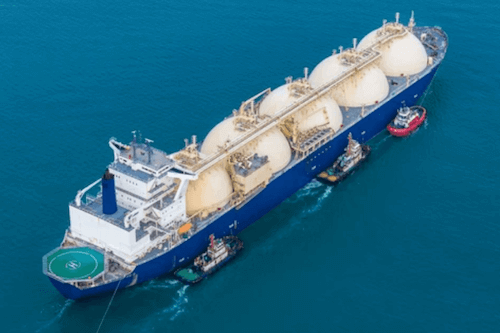
GTT Shares Hit a New Historical Record at 191 Euros
On Tuesday, GTT reached a new all-time high during the trading session, surpassing the previous peak of 191 euros set on February 20th. The stock of the cryogenic membrane specialist for liquefied natural gas transport is trading at 189.70 euros at midday, up 0.21% from the previous day. This momentum is part of a marked upward trajectory, with a gain of nearly 23% over one year.
By surpassing its previous record today, the GTT stock confirms the strength of its upward trajectory. The price is now significantly above its 50-day and 200-day moving averages, which are located at 170.49 and 165.54 euros respectively, indicating a well-established bullish momentum in the medium and long term. The gap between the current price and the 50-day moving average exceeds 11%, signaling a notable acceleration in recent weeks. The RSI, an indicator measuring the speed and magnitude of price movements, is at 68, close to the overbought zone set at 70. This positioning reflects persistent buying pressure, without immediately signaling an excess. The stock has indeed surpassed the resistance identified at 189.30 euros during the session, which may now act as a new technical floor. Over a week, the progression reaches 4.63%, while the quarterly performance is 10.61%.
Recent Analyst Revisions
Free · Every morning
Technical market signals, before the opening bell.
Bullish and bearish momentum, analyst changes, stocks to watch — automatically computed from Euronext data.
✓ Before 9 AM every morning✓ Euronext data✓ AI-powered analysis
You're in — subscription confirmed!
Your first edition is on its way. Check your spam folder and add us to your contacts.
An error occurred.
Indicative data. No investment advice. Unsubscribe at any time.
Gratuit · chaque matin
Ne ratez plus rien sur vos actions
La tendance derrière les cours. L'essentiel des valeurs Euronext en quelques minutes.
📈les valeurs en mouvement, sur la durée
🎯les objectifs d'analystes qui évoluent
📰les actualités qui font bouger les cours
tendance · 6 séances
✓ C'est fait, vous êtes inscrit !
Votre première édition arrive bientôt. Pensez à vérifier vos spams.
Une erreur est survenue.
CAC 40 · SBF 120 · données indicatives · aucun conseil en investissement · désinscription à tout moment.
Two recent analyst revisions accompany this dynamic. Berenberg raised its price target from 180 to 185 euros on February 24th, while maintaining a 'hold' recommendation. This target remains below the current price of 189.70 euros, implying a potential decline of about 2.5% according to this estimate. On the other hand, UBS raised its target from 200 to 210 euros the day before, with an unchanged 'buy' rating, suggesting a potential upside of about 10.7% from the current level. The next key date on GTT's financial calendar is the publication of the first quarter 2026 revenue, expected on April 22nd. This event will be an important milestone to assess the strength of the group's order book, in a context where the global demand for LNG carriers is supported by increasing needs for LNG transport.
GTT confirme ses objectifs pour l'exercice 2026 ; le Groupe dispose d'une très forte visibilité sur son chiffre d'affaires
Risks mentioned
Risque de retards dans les plannings de construction des navires, condition de la tenue des objectifs 2026
Perturbations géopolitiques citées comme facteur de contexte du marché des méthaniers
Chiffre d'affaires et EBITDA stables, sans croissance par rapport au 1er semestre 2025
Opportunities identified
Carnet de commandes à 1,9 milliard d'euros offrant une forte visibilité pour les années à venir
37 Mtpa de nouvelles décisions d'investissement en unités de liquéfaction de gaz naturel
Premières commandes de méthaniers à trois cuves et des plus grands réservoirs terrestres GST®
Outlook / guidance
Expected revenue: 760 millions d'euros
Expected EBITDA: 510 millions d'euros
The information presented in this article is provided for informational purposes only and does not constitute an investment recommendation, an incentive to buy or sell a financial asset, or investment advice. Readers are invited to conduct their own research before making any decision.
Investments in the stock market involve risks, including the risk of capital loss. Past performance of an asset or market is no guarantee of future results. Any investment decision should be made taking into account your personal financial situation, objectives and risk tolerance.