

ECB: Christine Lagarde Aims to Expand Euro Liquidity Access to Prevent Crises
Christine Lagarde announced on November 20, 2026, that the European Central Bank is working to make its euro swap lines more accessible to foreign central banks. The goal is to limit the risks of international financial contagion while strengthening the global role of the single currency. At the same time, more than thirty central banks have expressed interest in EUREP, an emergency euro financing facility whose access was expanded in February.
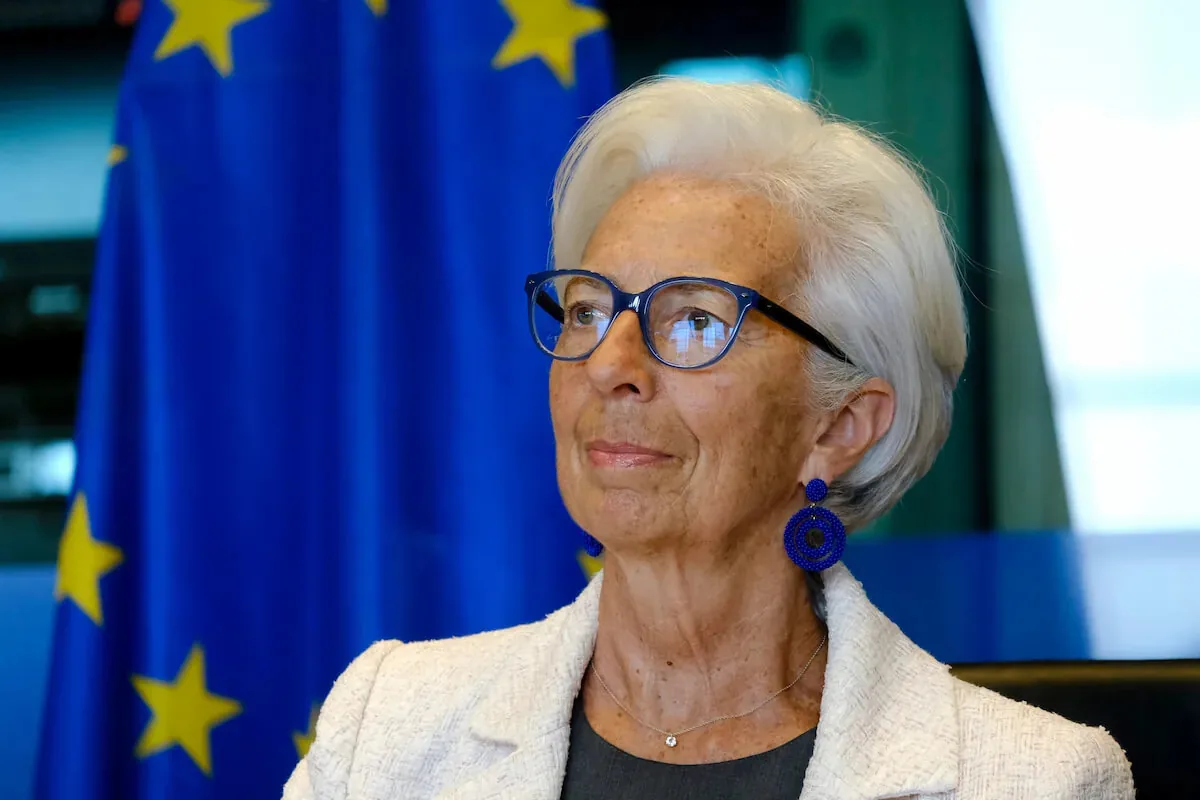
The ECB Aims to Limit the Spread of International Financial Crises
The European Central Bank plans to strengthen mechanisms allowing foreign central banks to access euro liquidity when financial markets experience periods of tension. In a speech delivered on Friday, November 20, at the 36th European Banking Congress in Frankfurt, Christine Lagarde presented this strategy as a response to the growing fragmentation of the international financial system.
The ECB president indicated that the institution is working to adapt its swap lines to this new environment and make them more accessible. However, she did not specify the new eligibility conditions, the central banks that might benefit, or the implementation timeline. Therefore, this is an announced direction, not a new operational decision already in effect.
The initiative aims for a goal that goes beyond the occasional management of crises. By facilitating access to the European currency, the ECB seeks to reduce the risks of an external financial disruption spreading to eurozone markets, while also reinforcing the role of the single currency in international trade and reserves.
Swap Lines to Ease Financing Strains
Liquidity lines between central banks are a safety mechanism designed to address funding tensions in foreign currencies. They provide temporary access to foreign currencies when market conditions make their acquisition difficult.
In a swap line arrangement, two central banks exchange their respective currencies at an agreed rate, with a commitment to reverse the transaction at a later date. The beneficiary central bank can then have access to liquidity in a foreign currency and, depending on the provisions of the arrangement, make it available to its financial system.
This mechanism can become particularly crucial when a crisis triggers a sudden demand for liquidity. Financial institutions or securities holders may then encounter difficulties in obtaining the currency needed to settle their obligations.
Without sufficient access to funding, some players may be forced to quickly sell assets to obtain liquidity. These sales can exacerbate price declines and spread tensions to other markets. The lines between central banks aim to limit this contagion risk.
According to the ECB, their primary function is to preserve the transmission of its monetary policy. Difficulties in obtaining euro funding abroad can indeed impact money market rates and the financial conditions in the eurozone.
Christine Lagarde stated on November 20 that the ECB aims to make its swap lines more accessible, without announcing a new overall amount or a precise schedule for this expansion.
Over Thirty Central Banks Interested in EUREP
The ECB also has another mechanism, called EUREP or Eurosystem Repo Facility for Central Banks. It allows foreign central banks to temporarily obtain euros in exchange for high-quality eligible securities denominated in the single currency.
Unlike swap lines, this mechanism is based on financing operations secured by securities. Both instruments serve complementary purposes but function differently: swaps involve a currency exchange, while EUREP requires holding eligible assets as collateral.
On February 14, 2026, the ECB's Governing Council decided to make EUREP permanent and, in principle, to open it to central banks worldwide. This opening remains subject to eligibility criteria, particularly regarding international sanctions, anti-money laundering, and risk management.
Operational details were specified on July 24. Each admitted central bank can access a line of up to 50 billion euros, in exchange for eligible collateral. Operations are remunerated at the rate of the ECB's main refinancing operations, plus a margin determined by the Governing Council. Their usual duration ranges from one day to a week, with the possibility of extension.
The enhanced mechanism has been available since the fourth quarter of 2026 for central banks that have completed their admission process. According to Philip Lane, a member of the ECB's Executive Board, the first admissions were finalized in early October.
In her November 20 speech, Christine Lagarde recalled that more than thirty central banks had expressed interest in EUREP. This figure had already been made public in October. It does not mean that all the concerned institutions have an active line or have effectively borrowed euros.
The ECB does not disclose the identities of the central banks that have accessed the facility but does communicate the aggregated amount of liquidity provided by its various international lines each week.
Enhancing the Euro's Global Appeal
Beyond crisis prevention, Christine Lagarde links these liquidity mechanisms to the international role of the euro. A currency widely used in trade, payments, and international reserves can help reduce Europe's economy's reliance on foreign currency funding.
For a reserve manager, the ability to obtain euros in liquidity from eligible securities, without having to sell them urgently, can provide an additional incentive to hold assets denominated in that currency.
This logic was also expanded by Philip Lane in a speech on October 21. According to him, improved access to euro liquidity could encourage foreign central banks to hold more European bonds, including less liquid sovereign bonds or securities issued by supranational institutions.
However, these are expected effects rather than results already demonstrated by the announcements on November 20. The expansion of the mechanisms does not guarantee an immediate increase in demand for European bonds, nor an automatic decrease in yields, nor an appreciation of the euro.
For investors, the announced evolution primarily demonstrates the ECB's intent to bolster the financial system's resilience against international shocks. The liquidity lines can mitigate some contagion mechanisms and limit forced asset sales, but they neither eliminate credit risks nor market risks, nor the possibility that an external crisis will nevertheless affect the eurozone.
This content has been automatically translated using artificial intelligence. While we strive for accuracy, some nuances may differ from the original French version.


