

Geopolitical Risks: CAC 40 Sectors Under Pressure, and Those That Resist
A Barrel Supported by a Range of Tensions in the Middle East
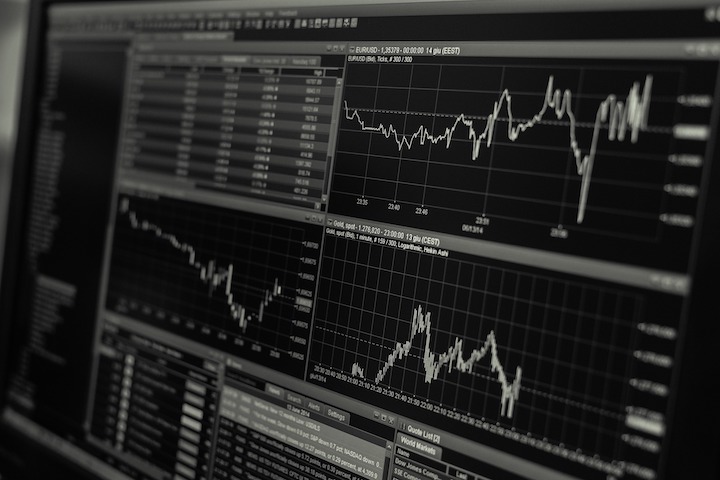
This morning, Brent crude is trading at $106.46, up 1.80%, extending the rebound observed after Friday's drop below $99. The barrel had already reached $120 on April 29, a level highlighting the extent of the risk premium integrated into the oil market.
Several factors are maintaining this tension. Donald Trump is considering launching an operation to allow ships blocked in the Gulf to pass through the Strait of Hormuz, while France and the United Kingdom are scheduled to co-chair a meeting with countries willing to contribute to a mission to secure this strategic passage. Meanwhile, Washington has announced new sanctions targeting individuals and entities accused of facilitating the sale of Iranian oil to China, notably through networks linked to the Revolutionary Guards in Dubai and Hong Kong, ahead of a planned meeting between Donald Trump and Xi Jinping.
The Lebanese front remains active despite the truce in place since April 17: an Israeli bombing in Kfar Dounine resulted in six deaths and seven injuries according to the official Lebanese agency. According to an investigation by the Wall Street Journal, not independently verified by AFP, the United Arab Emirates reportedly conducted direct strikes against Iranian oil facilities on Lavan Island in early April.
Energy and Oil Services: Sectors Supported by the Context
A barrel consistently above $100 could once again mechanically alter the revenue equation for major oil companies and oil service firms. On the CAC 40, TotalEnergies could then be seen as the most obvious candidate with Brent at $106.46, as its cash flow generation has historically been correlated with the price of oil. However, the availability of oil and refining capacities, as well as logistics chain constraints (including the potential implementation of lasting traffic restrictions in the Strait of Hormuz), could negatively weigh in the coming weeks.
Among Parisian energy-related stocks, players like Technip Energies or Vallourec could potentially benefit from a high-price environment that supports the investment budgets of producers. Moreover, the prospect of reinforced US sanctions on Iranian exports to China is tightening the supply-demand equation in the physical market, a parameter closely monitored by investors specializing in the energy value chain.
This supporting effect, however, remains conditional on the duration and consequences of the conflict (as well as on the fundamentals of each company). Friday's drop below $99, on a mere hope of diplomatic easing, highlighted the segment's sensitivity to signals coming from the Middle East. Lastly, the real impact of these tensions on energy infrastructure is yet to be determined.
Transport, Automotive, and Industrial: Sectors Exposed to Cost Shock
Conversely, several sectors within the CAC 40 are seeing their profit margins worsen due to rising fuel costs. The airline industry, where jet fuel accounts for a significant portion of operating costs, is among the most exposed, as are logistics companies whose road and maritime transport costs follow the dynamics of oil prices.
The automotive sector, represented in Paris by Stellantis and Renault, faces two challenges: pressure on household purchasing power due to prices at the pump and the potential return of high inflation, which can weigh on demand, as well as the impact on the costs of petrochemical inputs. Energy-intensive industries and chemical companies are also experiencing the effects of imported inflation, in a context where the surge in oil prices has already led to a 2.8% increase in producer prices in China in April, the sharpest rise since July 2022, according to the National Bureau of Statistics (see our dedicated article).
This mechanism of imported inflation also complicates the analysis of interest rate trajectories by major central banks, a factor that directly influences the valuation of sectors sensitive to the cost of capital, such as listed real estate or indebted utilities. The weakening of the image of stability in the Gulf, particularly in Dubai as a business and investment hub, adds another dimension for French groups operating in the region.
Banks, Luxury, and Consumer Goods: A More Indirect Effect
For CAC 40 banks, the impact of an oil shock is not primarily reflected in operational costs, but rather in the macroeconomic environment. A sustained rise in Brent oil prices fuels the risk of imported inflation, complicates the trajectory for lowering interest rates, and can affect credit quality if the most exposed companies see their margins tighten. BNP Paribas, Société Générale, and Crédit Agricole are thus more exposed to the general macroeconomic scenario than to the price of crude oil itself.
Luxury and discretionary consumer sectors find themselves in an intermediate position. LVMH, Hermès, Kering, and L'Oréal are not directly penalized by fuel costs like the transport or heavy industry sectors, but they may suffer from a decline in risk appetite, pressure on international consumers, and a slowdown in tourist flows if tensions in the Middle East disrupt travel or the image of stability in the Gulf. The risk is therefore less operational than psychological and commercial.
Defense, Aerospace, and Security: Possible but Selective Support
Conversely, stocks related to defense and security could attract renewed investor attention amid regional tensions. Companies like Thales, Safran, or Airbus have activities directly or indirectly linked to sovereign budgets, even though their profiles are quite different. For these groups, market perception is less influenced by Brent prices and more by the expectation of a sustainable cycle of military spending, surveillance, cybersecurity, and protection of critical infrastructure.
However, this perspective should remain cautious. An increase in geopolitical tensions does not automatically translate into new orders in the short term. Markets can react quickly, but defense and aerospace contracts follow long, often multi-year cycles. This is especially true considering many announcements have already been made over the past year. Therefore, any potential support for stock prices is more due to sectoral reallocation than an immediate impact on financial statements.
Real Estate, Utilities, and Indebted Stocks: The Risk Comes from Interest Rates
Listed real estate companies and indebted utility firms are exposed to another channel: interest rates. If rising oil prices revive inflation expectations, central banks may be encouraged to delay their monetary easing. This scenario would weigh on stocks whose valuation is heavily dependent on the cost of capital, particularly listed real estate, concessions, or certain highly capital-intensive infrastructure groups.
Thus, the risk is not only energy-related; it is also financial. A sustainably high Brent can increase volatility in bond markets, tighten financing conditions, and reduce the relative attractiveness of yield stocks. In this context, investors tend to distinguish between companies able to pass on their costs and those whose margins or balance sheets are more sensitive to an increase in financial charges.
A Sector Rotation Rather Than a Uniform Shock
The increase in Brent does not have a homogeneous effect on the CAC 40. It primarily supports stocks directly linked to energy, can favor certain defense or security profiles, but weakens sectors that consume fuel, energy-intensive industries, the automotive sector, and stocks dependent on low capital costs. The stock market reacts not only to the absolute level of the barrel but also to the anticipated duration of the shock and its impact on margins. The $100 threshold plays an important psychological role here. As long as the market views the increase as temporary, the effect remains sectoral and tactical. If Brent settles permanently above this level, the issue changes in nature: it is no longer just a geopolitical risk premium, but a potential macroeconomic shock, likely to alter expectations of inflation, interest rates, and corporate earnings.
This content has been automatically translated using artificial intelligence. While we strive for accuracy, some nuances may differ from the original French version.


