

Can Free Courses Really Turn You into a Successful Trader?
Sponsored content by Brisbane Media. The editorial team did not participate in the creation of this article.
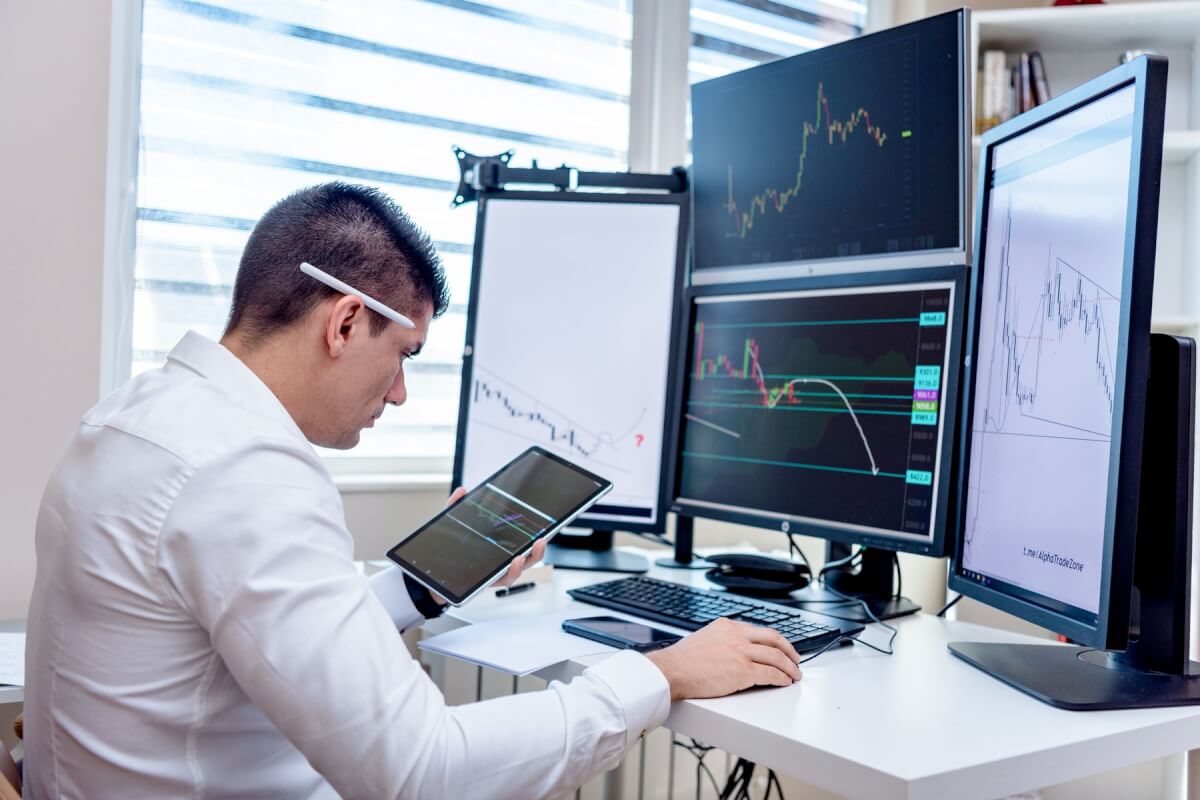
Free Courses: An Excellent Gateway
Online trading resources are abundant; that's a given. But are they sufficient if you want to master the ropes of the trade? While it's entirely possible to start without spending a single euro, learning about the stock market indeed requires a skill upgrade if one wants to become profitable. Improvement then demands a different approach, because between the theory accessible to everyone and the merciless reality of the markets, the journey is long. We shed light on this in the article.
When you start trading, you probably don't know where to begin. You might not understand what the stock market involves, what trading is, leverage, the different types of assets, the spread, the pip, or what the platform you wish to trade on looks like. To gain initial insights related to trading and the stock market, free online resources are thus the best starting point, especially when offered by regulated brokers.
Free Training with Regulated Brokers
In a world where scams and get-rich-quick schemes abound, the best course of action is to turn to free academies offered by reputable and regulated brokers. You can therefore take a trading course with AvaTrade without spending a cent. Brokers of this kind provide structured courses, regular themed webinars, and high-quality educational e-books. Their courses are commendable for being rigorous, factual, and free from promises of magical and immediate wealth. Even if you already have some experience, there are several free learning resources available for intermediate traders.
However, despite their reliability, free courses have limitations inherent to their model. Their educational goal is to equip you with the technical tools to start trading. They tend to skim over or omit certain complex aspects of trading. This is where a professional course can step in.
To Take the Next Step, There's Professional Training and Mentoring
Knowing the theory of chart analysis doesn't make you a profitable trader, just as reading a book on aeronautics doesn't equip you to pilot a commercial airplane.
Free courses are no longer sufficient, as trading is not just a series of mathematical rules. It's a profession of managing probabilities and self-control. Open-access courses teach you how to place a technical indicator, like the RSI or moving averages, but they don't explain how to build an overall trading system with a positive mathematical expectancy.
The Benefits of Personalized Guidance
Transitioning from an enlightened amateur to a disciplined trader can be significantly impacted by guidance from experienced professionals. You could benefit from:
- A critical and personalized perspective: A seasoned mentor or trainer analyzes your mistakes, identifies cognitive biases such as fear of loss or overconfidence, and steers you away from months of solitary wandering.
- Risk management tailored to your trading profile: This is the true core of the profession. High-level training dedicates the majority of its time to position sizing, calculating the risk/reward ratio, and preserving capital during a losing streak.
- Emotional mastery: Learning to accept losing money without panicking, overcoming frustration, and eliminating impulsivity requires significant psychological work that video tutorials cannot provide.
Before Investing, Always Test, Experiment, and Validate in a Demo Account
Every theory must be tested in the field. Before committing any real capital, practical testing is mandatory, whether you're a beginner seeking guidance or a professional wanting to try a new strategy. Demo accounts are often available for free from brokers. They provide you with virtual capital to apply your theories without losing real money. It's also an opportunity to get familiar with order entry interfaces, indicators, and to understand asset volatility without the accompanying financial stress.
Develop the Right Habits with a Demo Account
For the demo account to be beneficial to your learning, you must be disciplined with it as if it were real capital. The decisions you make should be the same as those you plan to make when you switch to a real account.
Keeping a Journal to Track Your Progress
Additionally, it is advisable to maintain a trading journal to record your positions, techniques used, stop-loss levels, and their outcomes.
Free Training: A Starting Point Instead of a Guarantee of Success
Free courses are an excellent starting point. In fact, they are essential before any professional guidance because they will help you understand more complex concepts. However, they won't be enough to make you a profitable professional trader, as trading is a demanding marathon that requires solid foundational knowledge.
Contenu conçu et proposé par Brisbane Media. La rédaction n'a pas participé à la réalisation de cet article.
This content has been automatically translated using artificial intelligence. While we strive for accuracy, some nuances may differ from the original French version.


