

Diamonds and Gemstones: Are They Really Worth Investing In?
In a context where gold has reached historic highs, investors seeking diversification are turning to a more discreet asset class: precious stones. Diamonds, rubies, sapphires, and emeralds appeal due to their portability, durability, and a particularly favorable French tax framework. However, behind the allure lies a complex market, where knowledge makes all the difference between a good investment and a disappointment.
Sponsored content by Brisbane Media. The editorial team did not participate in the creation of this article.
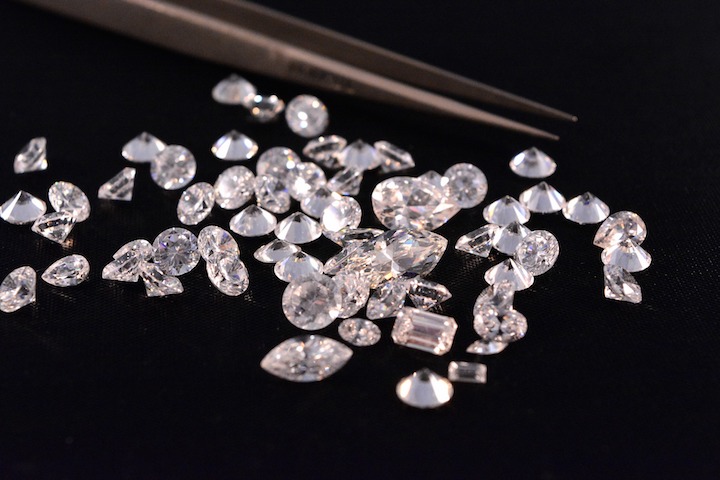
Numbers that explain the enthusiasm
The diamond sector perfectly illustrates its paradox. In the long term, the fundamentals remain strong: global demand is growing by about 6% annually, while production increases only by 2.8%, creating a structural imbalance favorable to prices. The global diamond jewelry market, valued at $358 billion, is expected to reach $437 billion by 2030.
However, the market has experienced significant turbulence. The rise of synthetic diamonds has significantly changed the landscape: in the United States, the share of engagement rings set with a lab-grown diamond rose from 12% to 52% over five years, now exceeding 60% among Millennials and Generation X. With a synthetic diamond sold at up to 90% less than its natural counterpart, this competition has impacted the prices of natural stones, which underwent a nearly two-year correction. But after this phase of decline, the natural diamond market is now showing signs of stabilization, especially favorable for stones over one carat. The message for investors is clear: quality and rarity are non-negotiable. It is the certified, rare stones of prestigious origin that maintain (and increase) their value.
A Tax Framework That Makes a Difference
This might be the most underestimated argument. In France, the taxation on precious stones is significantly more lenient than on traditional financial investments. The capital gain realized upon resale is subject to a flat tax of 6%, plus the 0.5% CRDS, totaling 6.5%. This is compared to the 30% flat tax applied to securities. The transfer to heirs also benefits from a favorable framework, making gems a true wealth management tool rather than just an object of desire.
Experts recommend limiting this asset class to 10 to 15% of a total portfolio as a diversification strategy and considering it over a horizon of at least five years.
Golden Rules to Avoid Mistakes
Investing in a precious stone is not something to be improvised. Three principles are consistently emphasized by professionals. First, certification: never consider a stone without a report from a recognized laboratory like GIA or HRD; it is the required passport for resale. The difference is significant: a GIA-certified diamond commands a premium of 10 to 30% compared to an uncertified equivalent stone. Next, quality before size: a one-carat diamond perfectly balanced on the 4Cs is often worth more than a heavier but mediocre stone. Finally, liquidity: unlike gold, diamonds do not have an official market price, and reselling them may require time and the expertise of a competent intermediary.
This last point is precisely where the success of an investment is determined. Resale is the stage where the amateur loses the most value due to a lack of expertise. Specialized companies like Auctentic, which has an office in Paris and organizes appraisal days throughout France, have made expertise and support their core business: authenticating, valuing at the right price, and advising the owner before any transaction. In a market where gemologists are the true guardians of authenticity, this role of a trusted intermediary has become central.
An Asset of Patience, Not Speculation
Investing in precious stones means accepting a simple rule: it is not a speculative investment but a long-term asset. The value of a beautiful, certified stone rarely depreciates over time, and its ability to be passed down through generations without preservation costs makes it a unique tangible asset. As long as you adhere to the fundamentals (certification, quality, and the right contact at the time of sale), precious stones deserve a place in a well-thought-out diversification strategy. Not as a gamble, but as a value to be passed on.
Caution: Precious stones are illiquid assets, whose value heavily depends on quality, certification, and resale conditions; they thus carry a risk of capital loss and should remain a diversification option.
Contenu conçu et proposé par Brisbane Media. La rédaction n'a pas participé à la réalisation de cet article.
This content has been automatically translated using artificial intelligence. While we strive for accuracy, some nuances may differ from the original French version.


