

Iranian Crisis: CAC 40 Plummets and Then Strongly Rebounds in a Single Session
A Session Reversal Driven by Geopolitics
Rarely has a session been so dominated by a single event. On Monday morning, the Paris Stock Exchange opened sharply in the red, weighed down by the ultimatum issued by Washington to Tehran concerning the Strait of Hormuz, a critical artery for global oil transit. The threat of US military strikes raised fears of an escalation with unpredictable consequences for global energy supplies. The CAC 40 was down more than 2%.
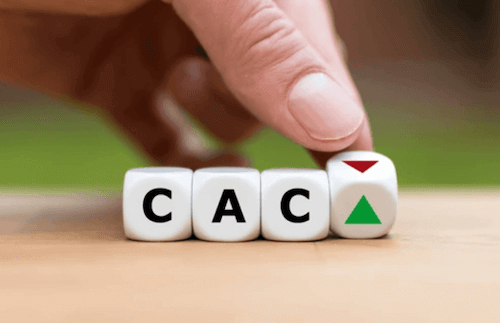
Then, by midday, US President Donald Trump described his discussions with Iran as « very fruitful » and announced the postponement of military operations. Relief was immediate. The Paris index swung into positive territory to close up 0.79% at 7,726.20 points. This marked a rebound of nearly three percentage points between the morning's low and the close. Despite this resurgence, the CAC 40 hit a new six-month low, extending the period of fragility that began in the preceding days.
The dispersion of values reflected the rollercoaster session: 22 stocks on the CAC 40 ended higher while 18 were lower. This relative balance indicates a market split between the geopolitical relief of the afternoon and the lingering concerns linked to the crisis with Iran.
ArcelorMittal, Kering, and Société Générale leading the recovery
The stocks most sensitive to the economic cycle and geopolitical tensions were naturally the first to benefit from the calm. ArcelorMittal led the increases in the CAC 40, jumping 5.24% to 44.21 euros. The steelmaker, highly exposed to commodity prices and international trade, significantly benefited from reduced risk of conflict in the Middle East.
Kering followed with a rise of 4.72% to 245.20 euros. The luxury group's fortunes, closely tied to global consumer confidence, rebounded after morning losses. Société Générale gained 4.69% to 63.84 euros, as banking stocks are traditionally among the most responsive to changes in market sentiment.
Saint-Gobain (+4.02% to 70.82 euros) and Airbus (+3.41% to 166.40 euros) rounded out the list of top gainers. The turnaround influenced various sectors—materials, luxury, finance, industry, and aerospace—indicating that the rebound was driven by a global factor, specifically geopolitical de-escalation, rather than news specific to each company.
Euronext, Bureau Veritas, and Carrefour Show Less Resilience
Not all stocks participated in the afternoon rebound. Euronext ended at the bottom of the rankings with a drop of 1.85% to 132.90 euros. Bureau Veritas declined by 1.74% to 26 euros, while Carrefour fell 1.57% to 15.01 euros. The retailer continues to face challenges in an uncertain consumer environment.
Pernod Ricard lost 1.36% to reach 63.64 euros, and Thales retreated by 1.32% to 239.10 euros. The decline of the defense specialist may seem paradoxical given that geopolitical tensions were central to the session, but the announcement of a de-escalation has effectively reduced expectations of urgent military spending.
Beyond closing in positive territory, this session illustrates the extreme nervousness prevailing in European markets. Any development in the standoff between Washington and Tehran over the Strait of Hormuz has the power to swing indexes by several percentage points within hours. The CAC 40 indeed ends in the green, but remains at its lowest level in six months—a reminder that the day's relief doesn't erase the tensions accumulated over recent weeks.
This content has been automatically translated using artificial intelligence. While we strive for accuracy, some nuances may differ from the original French version.


