

Wall Street rebounds ahead of Thanksgiving weekend, buoyed by hopes of rate cuts
US stock markets saw a session of moderate gains on Tuesday, November 25, with the Dow Jones rising 1.43% to 47,112 points and the S&P 500 climbing 0.91% to 6,765 points. This rebound comes in a tightened market a few days before Thanksgiving, as trading volumes dwindle. Investors are paying less attention to economic uncertainties that weighed on previous sessions, opting instead to bet on a cut in interest rates in December. Federal Reserve officials, questioned at the end of the week, have opened the door to further monetary easing, with the probability of a 25 basis point rate cut now at 76% for the year's final meeting. It is in this context of cautious optimism that a pronounced divergence is forming between sectoral winners and losers.
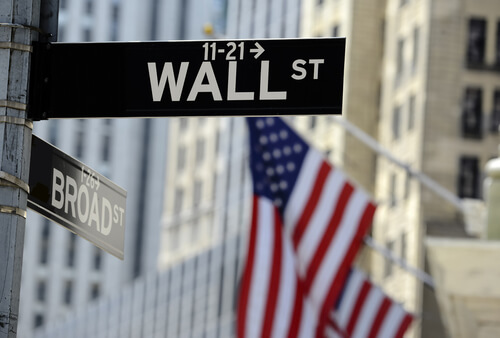
Builders and manufacturers lead the way as anticipated monetary easing revives risk appetite
The construction sector led the gains, with Keysight Technologies at the forefront thanks to an exceptional performance of 10.01%, significantly outpacing its tech peers. This company, specializing in testing equipment for AI infrastructure, posted strong quarterly results that exceeded expectations across the board. Its orders rose by 14% year-over-year, driven by increased demand for testing solutions in semiconductors and 6G networks. Builders FirstSource (+8.40%) and D.R. Horton (+5.78%) closely followed, as the real estate sector found renewed momentum in light of potential monetary easing. Lennar (+6.60%) and PulteGroup (+5.39%) also benefited from this trend, despite a housing market that remains fragile under the pressure of high mortgage rates. These builders are indeed facing tough times, with 41% of them cutting prices in November, a record since Covid. However, the prospect of rate cuts as early as December is bringing renewed hope to developers. Albemarle Corporation (+8.09%), the lithium giant, is also part of this renewed confidence. The company is benefiting from the anticipated growing demand for energy storage, as lithium prices reached $24,000 per ton before experiencing a slight correction. Chipotle Mexican Grill (+7.09%) rounds out this list of winners, bolstered by the arrival of a new CEO from Carnival, invigorating investors despite a challenging year for the fast-food group.
Nvidia and AMD Slip Amid Market Uncertainty and Competitive Threat from Google
Conversely, semiconductor giants experienced a more mixed session, with some seeing decidedly negative results. Nvidia fell by 2.59%, hit by reports that Meta is exploring a strategic partnership with Alphabet for the acquisition of artificial intelligence processors (TPUs) instead of Nvidia chips. This news reignited fears of market fragmentation for accelerators and a potential erosion of Nvidia's dominance. Advanced Micro Devices dropped even further, plunging 4.15%, as investors anticipate increased competition in this rapidly evolving segment. Oracle also faced a moderate decline of 1.62% following an analyst downgrade. Netflix could not withstand the overall pressure on mega-cap tech stocks, slipping 2.40%, as the company continues to grapple with growth concerns despite its encouraging operational performance. J.M. Smucker, down 3.73%, stands out as an exception outside the tech sector, affected by its own operational challenges and persistent inflationary pressures. This divergence between losing semiconductor stocks and winning construction and energy stocks highlights the market's need to adjust to the structural changes in the American economy.
Consumer confidence plummets as hopes for rate cuts shape the market
Tuesday's session unfolds against a backdrop of deteriorating macroeconomic conditions. The Conference Board's consumer confidence index plummeted to 88.7 in November, falling well short of the expected 93.4, marking the lowest level since April. September's retail sales, delayed due to the government shutdown, increased by only 0.2% month-over-month, disappointing expectations of a 0.4% rise. This data reflects a weakened American consumer, pressured by persistent inflation and a weakening labor market. Unemployment rates climbed to 4.4% in September, reaching their highest level in nearly four years. However, it is precisely this economic weakness that fuels hopes for a rate cut. Mary Daly, president of the Federal Reserve Bank of San Francisco, and John Williams, head of the New York Fed, both indicated this week a willingness to consider further easing. The bond markets have reacted to this outlook by slightly lowering the yields on ten-year Treasuries, which stood at 4.00% as of November 25. This favorable monetary movement partly explains the uptick in stocks, especially those sensitive to economic conditions and interest rates, such as construction and real estate. Nonetheless, the accumulation of negative economic news creates an underlying vulnerability: investors are hoping for a monetary shift that would ease credit conditions and stimulate spending, the only remedy capable of restoring growth to more robust rates as the year 2026 approaches.
This content has been automatically translated using artificial intelligence. While we strive for accuracy, some nuances may differ from the original French version.


