

Michelin Shares Jump 2% Despite a 13% Decline Over the Year
Michelin shares saw a significant increase this Wednesday, March 25, trading at 29.48 euros mid-session, up 2.01% from the previous day's close of 28.90 euros. This rebound is part of a general recovery in the Paris market, with the CAC 40 up 1.32% during the session. However, the tire manufacturer has experienced a decline of 13.24% over the past year.
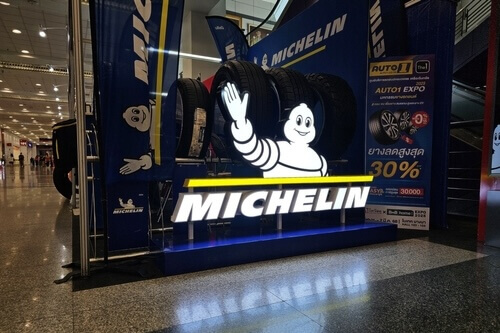
Michelin Shares Experience First Significant Rebound After a Week of Decline
Michelin shares recorded their first significant rebound after a week of decline, with the stock having lost 1.24% over the last seven days. This recovery accompanies the bullish movement of the CAC 40, which was up 1.32% during the session at 7,846.43 points. Other French industrial stocks are following the same trend: Schneider Electric is up 2.73% and Airbus is up 1.71%. This surge comes after the geopolitical de-escalation between the United States and Iran announced on Sunday, March 23, which had triggered a sharp rebound in the Paris market at the end of that day's session. The postponement of American strikes contributed to easing tensions in European markets, sensitive to the risk of a blockade of the Strait of Hormuz. Michelin, whose activity heavily depends on global energy and transport costs, operates in this context of still high volatility, with the VIX at 26.78 points as of March 20. Over three months, the stock maintains a gain of 5.51%, but remains significantly lower than its levels a year ago. The next key event on the financial calendar is the publication of the first quarter 2026 sales, scheduled for April 29, followed by the annual general meeting planned for May 22.
Despite Wednesday's Progress, Michelin's Technical Configuration Remains Fragile
Despite the progress this Wednesday, Michelin's technical configuration remains fragile. The price of 29.48 euros is significantly below its 50-day moving average of 31.56 euros, indicating a still intact medium-term bearish trend. The 200-day moving average, at 30.44 euros, also represents a ceiling that the stock has not managed to break through. The Relative Strength Index (RSI) stands at 36, a level close to the oversold zone generally set at 30. This indicator, which measures the ratio between recent price increases and decreases, signals that selling pressure has been dominant in recent weeks, although it has not reached an extreme threshold. Regarding key thresholds, the most relevant support is at 28.45 euros, a level tested during recent sessions of decline. The major resistance is established at 34.48 euros, well above the current prices. The gap between these two bounds reflects the amplitude of the uncertainty zone in which the stock has been oscillating for several weeks.


