

The "Papin Bonus": When Purchasing Power Challenges Salary Logic
What if the solution to purchasing power lies in profit-sharing? According to a survey conducted by the agency How Much among 3,001 French citizens, 84% express their support for the proposal by Serge Papin, Minister of SMEs and Purchasing Power: making profit-sharing bonuses immediately available and tax-free. This overwhelming approval reveals strong expectations, but also a deep-seated tension in how the French perceive work compensation.
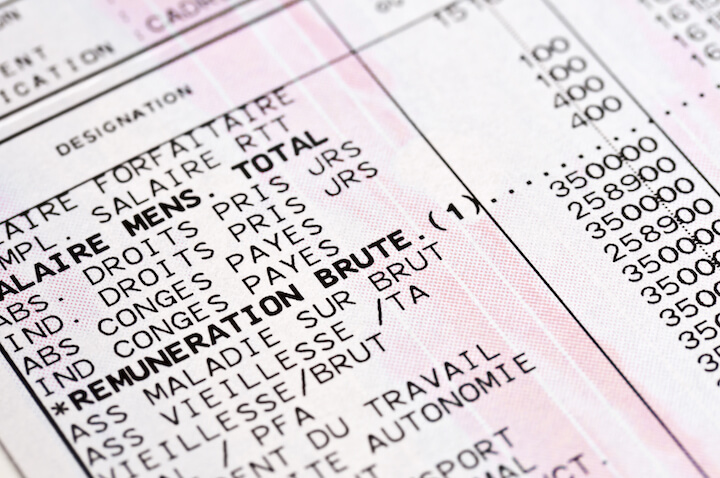
Currently, profit-sharing is exempt from social security contributions (except for CSG/CRDS), but it is subject to income tax if received immediately. Conversely, when it is invested in a company savings plan (such as PEE, PEI, PERECO), it is not taxed. In 2024, nearly 13 billion euros in profit-sharing were distributed, but only 30% was taken as immediate disbursements. The reform proposed by Serge Papin would therefore have a direct budgetary impact, as well as a psychological effect: restoring confidence in the connection between work and purchasing power.
"Employee savings plans were designed to support long-term goals, not to offset day-to-day financial challenges. If the French want to be able to access this immediately today, it's clear that salaries are no longer fulfilling their primary role, » explains Sandrine Dorbes, founder of How Much and a compensation strategy expert.
Widespread Membership, Yet Ongoing Divisions
In detail, 59% of those surveyed are « strongly in favor » and 25% are « somewhat in favor » of the measure. Opposition is capped at 7%. A rare unanimity, but nuanced.
Indeed, 71% of respondents believe that this bonus should be paid « without income conditions, » while 27% wish for it to remain linked to a savings principle and 25% prefer it to be a temporary measure.
The results confirm a need for flexibility: the French want the option to choose between spending, saving, or paying down debt. In the survey, 36% stated they would use a profit-sharing bonus for everyday expenses, 24% for a one-time purchase, and 31% for saving (18% for precautionary savings, 13% for long-term savings). In other words, far from being viewed as « easy money, » this bonus would be used responsibly and pragmatically, with a multiplier effect on actual consumption.
However, this support is not without concerns: 33% of respondents fear that companies might prioritize bonuses over increases in fixed salaries in the future. A legitimate concern, given that the share of wages in added value has stagnated for the past 20 years. Nevertheless, 57% judge the measure « fair across employee categories."
The Symbol of a Changing Social Model
Behind the « Papin Bonus, » the entire balance between work, income, and recognition is questioned. Incentives, which are inherently collective tools, here become a lever for immediate, almost individual, redistribution.
This demand for immediacy reflects the distress of a constrained middle class: wages are no longer sufficient to offset the rising cost of living, and long-term savings plans are being redirected towards short-term needs.
54% of respondents believe that this measure would have only a temporary effect on their purchasing power, compared to 25% who see it as having a lasting impact. However, this short-lived boost would have a certain macroeconomic impact: 56% of French people say they would spend more in the three months following the payment, thereby mechanically supporting consumption and growth.
Ultimately, this bonus crystallizes the tension between two timelines: the immediate needs of households and the logic of long-term investment. It illustrates the silent transformation in the approach to remuneration: less focus on future planning, more on immediate responsiveness.
As Sandrine Dorbes sums it up, « questioning the 'why' always precedes the 'how much'."
This content has been automatically translated using artificial intelligence. While we strive for accuracy, some nuances may differ from the original French version.


