

Gold Prices: Understanding the Fluctuations of the Precious Metal - Sponsored Article
The gold price regularly captures the attention of investors, especially during times of financial market uncertainty. As a precious metal used for centuries as a store of value, gold has a unique price dynamic. Its movement does not depend on a single indicator: it results from the interaction between interest rates, currencies, inflation, investment demand, central bank purchases, and the geopolitical context.
Sponsored content by Brisbane Media. The editorial team did not participate in the creation of this article.
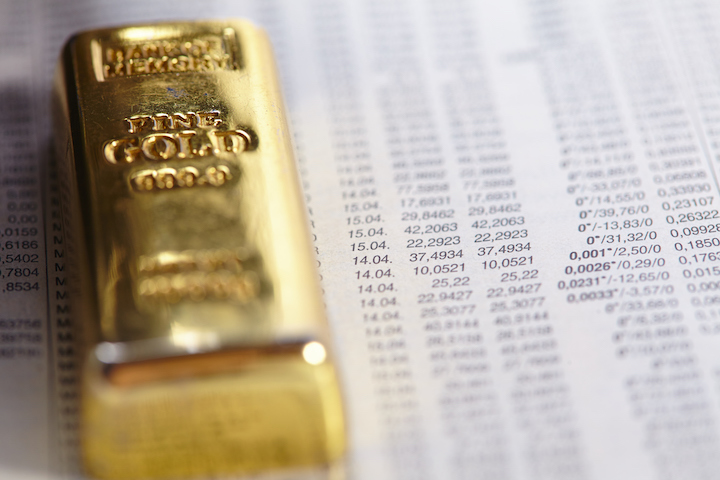
How is the price of gold determined?
In international markets, gold is primarily quoted in dollars per troy ounce, approximately 31.1 grams. The London market serves as one of the main global references. The price also fluctuates on the markets based on supply and demand.
For a French investor, it is also important to consider the exchange rate between the euro and the dollar. An increase in gold priced in dollars does not necessarily result in an identical rise in euros. Conversely, a decline in the euro against the dollar can support the value of gold expressed in European currency.
Key Factors Influencing Gold Prices
Interest rates play a significant role. Gold neither pays interest nor dividends. When real yields, adjusted for inflation, increase, income-generating assets can become relatively more attractive. Conversely, a drop in real rates can reduce the opportunity cost associated with holding gold.
The dollar is another closely watched factor. Since the metal is widely priced in the U.S. currency, movements in the greenback can alter its price for buyers using other currencies.
Economic or geopolitical uncertainty can also increase the demand for gold. The metal is often sought as a diversification asset when investors fear a deterioration in the financial environment. However, this relationship is not automatic: the price of gold can experience downward phases, even during periods of high tension.
Inflation, Central Banks, and Physical Demand
Gold is sometimes presented as a hedge against inflation. This relationship needs to be nuanced. In the short term, an acceleration in consumer prices does not automatically lead to a rise in gold. Interest rate expectations, monetary policy, and the evolution of the dollar can have an equally significant influence.
Central banks are also an important player in the market. Some hold gold in their international reserves and may increase or decrease their purchases based on their diversification objectives. Additionally, there is demand from jewelry, investment in bars and coins, and flows into gold-backed financial products.
Understanding Gold Prices
Tracking the price of gold thus requires examining several variables simultaneously. The level of the metal in dollars isn't sufficient: for an investor in the eurozone, the exchange rate also matters. It's also useful to distinguish short-term movements, often sensitive to monetary announcements and geopolitical events, from longer trends linked to global demand and central bank policies.
Lastly, the image of gold as a safe haven does not imply permanent stability or guaranteed performance. Its price can experience significant fluctuations. Before making any investment decision, it's important to assess one's time horizon, overall risk exposure, and the potential role of gold in a diversified portfolio.
Contenu conçu et proposé par Brisbane Media. La rédaction n'a pas participé à la réalisation de cet article.
This content has been automatically translated using artificial intelligence. While we strive for accuracy, some nuances may differ from the original French version.


