

Hermès Shares Gain 7% in a Week Ahead of Crucial Test on Tuesday
Hermès International shares traded at €1,786.50 this Friday mid-session, up 2% from the previous day's close. This increase is part of a weekly rebound of over 7%, while the CAC 40 is up 0.80% in the session. The luxury group will publish its first quarter 2026 revenue next Tuesday.
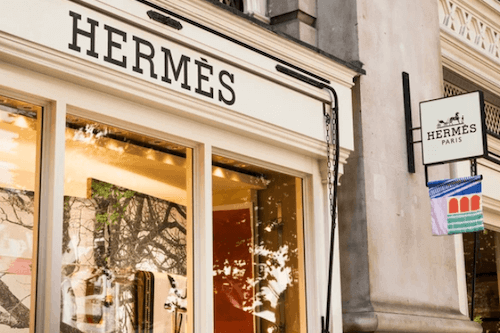
Hermès International's Stock Recovers
Hermès International's stock price has regained ground this week, with a performance of 7.14% over the past seven days. However, the stock remains down by 19.42% over three months and 19.27% over the past year, indicating a deep correction that is far from being resolved. Technically, the stock is currently trading below its 50-day moving average, which stands at €1,916.20, and well below the 200-day average of €2,098.53. This gap illustrates the downward pressure that has been weighing on the stock for several weeks. The RSI, at 47, reflects a neutral position, with no signs of overbought or oversold conditions. The first significant support is at €1,609, while major resistance is at €2,062. The luxury sector in Paris shows a similar trend this Friday: LVMH is up 1.48% and L'Oréal has gained 0.78% in the session, in a coordinated recovery movement in the segment.
Financial Calendar in Focus This Week
The financial calendar of the group is at the center of attention this week. Hermès will announce its first quarter 2026 revenue on April 15, next Tuesday. This release will be a concrete first test of the Parisian saddler's business dynamics in an uncertain macroeconomic environment, marked by a prolonged decline in the valuations of European luxury. The general meeting of shareholders is scheduled two days later, on April 17, followed by the half-year results expected on July 29. The sustained pace of these deadlines could keep the stock highly reactive in the coming weeks. It is worth noting that the stock's beta, measured at -0.04, indicates an almost total decorrelation with the fluctuations of the reference index, giving the stock a unique volatility profile, more guided by the group's fundamentals than by general market movements.


