

SBM Offshore Raises 2026 Targets After 77% Revenue Increase
Growth over the first nine months relies mainly on the turnkey business, supported by asset disposals and new contracts that do not yet contribute to directional EBITDA. Meanwhile, the directional net debt of the floating production unit (FPSO) specialist has fallen by 36% since the end of 2025.
Turnkey Revenue Up 132% Over Nine Months
SBM Offshore published its activity update for the first nine months of the fiscal year on November 12, 2026. The group's directional revenue reached $6,337 million, compared with $3,571 million a year earlier, an increase of 77%.
This growth stems mainly from the Turnkey segment, whose revenue rose 132% to $4,565 million from $1,964 million. The Lease and Operate segment grew 10% to $1,772 million from $1,607 million.
According to the group, the increase in this segment is primarily due to four factors: the sale of the FPSO One Guyana in February 2026, the front-end engineering design (FEED) contracts for the Longtail project, and the SEAP I and SEAP II contracts.
Also contributing was the sale of a 45% stake in the FSO Chalchi to Nippon Yusen Kabushiki Kaisha (NYK), a long-standing partner of the group, completed in June 2026. These gains were partly offset by the delivery in 2025 of three FPSOs (Almirante Tamandaré, Alexandre de Gusmão and One Guyana), which had contributed to the Turnkey revenue of the comparison period.
The SEAP I, SEAP II and Longtail projects already contribute to Turnkey revenue. However, they remain below the 25% completion threshold and therefore, at this stage, make no contribution to directional EBITDA.
For the Lease and Operate segment, the increase mainly reflects the addition to the fleet of the three FPSOs delivered in 2025, as well as an expanded scope of rechargeable services and the solid performance of the fleet. It was partly offset by the exit of the FPSO Aseng and the FPU Thunder Hawk in the fourth quarter of 2025.
Annual Targets Raised and Net Debt Reduced
Based on these results, SBM Offshore has raised its targets for fiscal year 2026. The group now aims for directional revenue of approximately $7.9 billion, compared with approximately $7.6 billion previously, and directional EBITDA above $1.95 billion, compared with approximately $1.9 billion before.
Øivind Tangen, Chief Executive Officer, attributes this performance to “disciplined project execution and high availability across our entire fleet.” He added: “Size only creates value if it is accompanied by discipline.”
Directional net debt stood at $3.6 billion at the end of the third quarter of 2026, compared with $5.7 billion at the end of 2025, a decrease of 36%. This decline is mainly linked to the sale of the FPSO One Guyana and the repayment of the associated debt, while the hedging ratio on floating-rate debt exceeds 90%.
On the shareholder side, a cash interim dividend of $100 million, or €0.5075 per ordinary share, has been paid. The $270 million share buyback programme is approximately 72% complete.
The group states that it remains on track to return at least $2.1 billion to its shareholders by 2031, with additional potential in the event of new contracts being won.
Five Projects Under Way and a Fleet Available at About 99%
According to the Chief Executive Officer, the fleet produces more than two million barrels of oil equivalent per day, with an availability rate of approximately 99%. The portfolio now includes five projects at different stages of execution, and the group states that it remains on schedule.
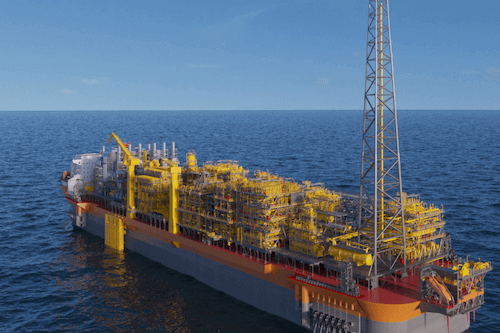
The FPSO Longtail is in the front-end engineering design phase, in line with the planned timeline. According to the group, it will have the largest gas processing capacity ever installed on an FPSO. Under construction, the FPSO Jaguar, intended for ExxonMobil Guyana under a sale and operate contract, is more than 75% complete.
Øivind Tangen anticipates 16 opportunities in the group's core target market over the next three years. SBM Offshore has two uncommitted hulls under construction and additional capacity secured with partner shipyards.
The executive did, however, specify: “We will remain selective, favouring projects that offer the right balance between risk and return.”


