

Kering Stock: A Year Down 27% Under Pressure, but Signs of Stabilization to Watch for in 2026
Kering's stock plummeted by 26% in 2025, widening a gap of more than 38 points with the CAC 40. This significant markdown reflects the ongoing struggles of Gucci, the group's flagship brand, in a challenging luxury market environment. Nonetheless, several strategic moves – including the agreement with L'Oréal and the appointment of a new CEO – managed to curb investor skepticism in the second half of the year.
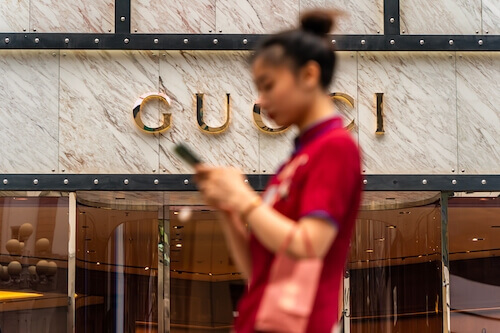
A significant performance gap with the CAC 40, exacerbated by operational challenges at Gucci
Over the past year, Kering lost 26.95%, while the CAC 40 index rose by 11.43%. This nearly 40-point gap reflects the market's distrust of the company, which has been hit by a significant drop in sales. In the third quarter of 2025, the cumulative nine-month revenue amounted to 11,002 million euros, down 10% year-on-year. Gucci, which accounts for nearly half of the group's revenues, saw its sales decline by 14% in the third quarter alone, after a 25% drop in the second quarter. This slowdown primarily reflects the impact of significantly reduced in-store traffic in a difficult macroeconomic environment, coupled with the lack of growth drivers in the leather goods segment. The stock market year did see some occasional rallies, notably in February, when the stock jumped 14.7% in six days, from February 10 to 17. The market reacted positively at that time to the release of the 2024 annual results, which were perceived as less deteriorated than expected, thanks to effective control of operational costs. Later, in September, from the 10th to the 18th, the stock gained 15.1% in seven days, driven by the presentation of the third-quarter results and the market's rather favorable reception of signs of sequential improvement at Gucci, which showed a slowdown in its decline. Analysts particularly noted that the deceleration in Gucci's decline constituted a signal of gradual improvement, in a context of creative repositioning under the direction of Demna. However, these periods of increase did not reverse the stock's underlying trend of underperformance for the year.
A Major Strategic Shift with the Sale of the Beauty Division to L'Oréal
On October 19, 2025, Kering announced the sale of its beauty division to L'Oréal for 4 billion euros. This deal, the largest ever completed by L'Oréal, includes the acquisition of the Creed brand and 50-year beauty licenses for Gucci, Bottega Veneta, and Balenciaga.
This transaction comes as the group reported a net debt of 9.5 billion euros and a net profit decline of 46% in the first half of 2025. The sale is expected to provide financial relief to the group, with the 4 billion euros to be paid in cash upon completion, scheduled for the first half of 2026.
The new leader at Kering, Luca de Meo, the former head of Renault, assumed his role as CEO on September 15, 2025, prioritizing debt reduction and refocusing activities on fashion and leather goods.
Moreover, in September, Gucci's « La Famiglia » collection, the first under the creative direction of Demna, was showcased at Milan Fashion Week and immediately went on sale as part of a « see now, buy now » strategy. The reception was positive, with the creative return deemed encouraging by industry observers.
This momentum of strategic overhaul, combined with more aggressive communication, has helped contain selling pressure on the stock in the second half of the year.
2026 Outlook: Recovery Hinges on Gucci's Growth and Debt Reduction
In an internal memo sent to the group's executives, Luca de Meo emphasized that returning to growth would require reducing dependence on Gucci while remaining humble in the face of the task's magnitude. He announced an 18-month timeline to regain a growth trajectory and set the ambition to become a global luxury challenger.
Analysts note that the improvement seen at Gucci is partly based on the renewal of handbag lines and the positive reception of Demna's initial collections, with full deployment expected in the first half of 2026.
Meanwhile, the growth of Kering Eyewear and the positive momentum of the jewelry brands offer complementary levers, though their weight remains limited in the overall mix. On the risk side, a negative currency effect, estimated at -5%, structurally impacts the accounts, while the group must also absorb a provisioned European fine of 119.7 million euros related to Gucci. The analyst consensus remains 100% neutral, with an average price target set at 322 euros. Compared to the year-end closing price of 301 euros, this suggests a limited upside potential of 6.98%, reflecting the market's ongoing caution. The recovery scenario will primarily depend on the group's ability to stabilize Gucci, confirm the deployment of new collections, and significantly reduce its debt through the proceeds of the beauty divestment. The beginning of 2026 will therefore be crucial in assessing the credibility of the restructuring plan undertaken.
This content has been automatically translated using artificial intelligence. While we strive for accuracy, some nuances may differ from the original French version.


