

Aircraft Carrier: The "France-Libre" Program, a €10 Billion Initiative Involving 600 Companies in France
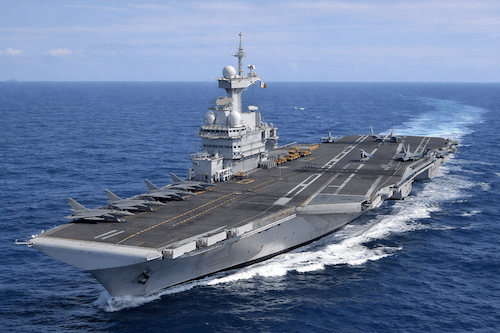
A €10 billion program restructuring the entire defense naval sector
The PA-Ng stands out due to its financial scale and the widespread impact it has on the entire defense industry ecosystem. Valued at 10 billion euros, it is the most ambitious naval program in recent French military history. The project is coordinated by three major contractors: Naval Group, specializing in combat ships; TechnicAtome, responsible for nuclear propulsion; and Chantiers de l'Atlantique, tasked with constructing the hull and massive structures of the vessel.
Beyond these leading industrial players, the program involves more than 600 SMEs and mid-sized companies in its value chain. This extensive supply chain integration spreads economic benefits well beyond the major groups. For numerous companies specializing in precision mechanics, embedded electronics, or specialized metallurgy, the PA-Ng represents a significant contract that secures their workload for several years. The program thus acts as a catalyst for consolidation among hundreds of industrial players scattered across the national territory.
A Majority of French Purchases: Local Roots
Approximately 90% of purchases related to the aircraft carrier are likely to be made from suppliers based in France. This exceptionally high rate limits reliance on foreign supply chains for critical components—a central issue in contemporary defense strategies.
Three regions concentrate the majority of the direct industrial impacts: Pays de la Loire, where the shipbuilding site in Saint-Nazaire is located; Brittany, a historical hub for the French Navy and Naval Group in Brest; and the Provence-Alpes-Côte d'Azur region, particularly around Toulon, the planned home port for the vessel. This geographical concentration leads to the emergence of employment and skills hubs highly specialized in naval defense. It effectively creates industrial clusters that will be fueled for several decades, from the design phase to the scheduled heavy maintenance operations throughout the ship's lifecycle.
Up to 14,000 jobs and over 200 professions involved over a decade
The impact of the PA-Ng on industrial employment could be significant. On average, the program is expected to generate around 8,800 direct and indirect jobs, with a peak estimated at 14,000 jobs at the height of the construction phase. These figures cover a wide range of qualifications: more than 200 different skills are required, from underwater welding to nuclear engineering, as well as combat systems architecture and embedded aeronautical integration.
This diversity reflects the increasing complexity of modern military platforms. It also requires a considerable training effort. The program fosters the development of educational pathways from vocational certificates to doctoral degrees, in order to create a pipeline of skills tailored to the project’s specific technical needs. For the regions involved, this ripple effect on professional and academic training represents a lasting legacy, independent of the ship's construction timeline alone.
45-Year Lifecycle: A Constant Industrial Driver for the French Defense Industry
The aircraft carrier « France Libre » should not be viewed as a static piece of equipment. Its expected lifespan of 45 years involves a succession of intensive industrial phases: scheduled maintenance periods, major technical overhauls, mid-life upgrades, and successive integrations of new technologies. Each of these stages necessitates specialized industrial expertise and generates significant business volumes for companies in the defense industrial and technological base.
This exceptionally long timeframe requires the maintenance and renewal of skills, particularly in naval nuclear propulsion, the architecture of large surface ships, and complex weapons systems. The pressure to recruit and retain critical talent becomes a structural challenge; it's not about mobilizing skills for a one-off project, but ensuring the continuity of strategic expertise over nearly half a century.
This content has been automatically translated using artificial intelligence. While we strive for accuracy, some nuances may differ from the original French version.


