

Oil: Brent Soars to $114, a Level Unseen Since the Start of the War in Ukraine
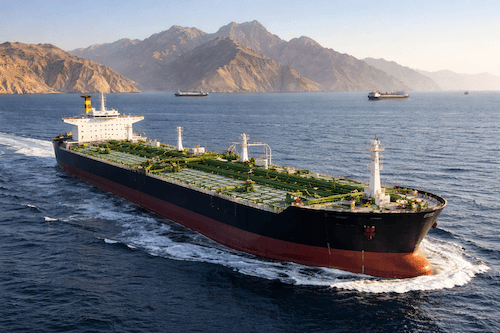
Trump's Ultimatum to Iran: The Strait of Hormuz at the Center of the Standoff
On Saturday evening, Donald Trump issued an ultimatum to Iran, demanding the reopening of the Strait of Hormuz by 7 p.m. Washington time this Monday. Should Iran refuse, the American president threatened to launch strikes on Iranian power plants. The Strait of Hormuz, located between Iran and the Arabian Peninsula, is a critical chokepoint through which about one-fifth of the world's oil passes. Its closure, even temporarily, is one of the most dreaded scenarios for energy markets.
This standoff marks one of the most direct escalations between Washington and Tehran in decades. The threat of American strikes on Iranian electrical infrastructure has raised the military and diplomatic pressure to levels rarely seen in the region since the hostage crisis of 1979-1981. Oil markets, extremely sensitive to any risk of supply disruption in the Gulf, have responded with a surge in prices.
Iran Threatens Gulf Infrastructure: Qatar and Saudi Arabia at the Forefront
In response to the American ultimatum, Iran has significantly broadened the scope of the crisis. Tehran now threatens to strike key infrastructures throughout the Gulf region, targeting the energy sector, information technology systems, and water desalination facilities. These threats directly affect countries like Qatar, whose economy and population are heavily reliant on these vital installations.
Water desalination, in particular, is a critical resource for several Gulf States where natural freshwater resources are extremely limited. An attack on these infrastructures would not only trigger an energy crisis but also potentially lead to a humanitarian emergency. This expansion of Iranian threats beyond just the Strait of Hormuz transforms a bilateral conflict into a regional crisis with multiple implications, which partly explains the significant reaction of the oil markets.
From $60 to $114 in Three Months: An Analysis of a Near Doubling
To grasp the magnitude of the shock, it's essential to look back a few months. At the end of December 2025, Brent crude was trading around $60 per barrel, a low point reflecting then-moderate global demand forecasts and abundant supply. Within a span of three months, the price of oil nearly doubled, driven by the gradual rise in geopolitical tensions in the Middle East. This trajectory is reminiscent of historical oil shock episodes, where supply disruptions triggered sharp and rapid price increases.
The last comparable episode was in 2022. Following Russia's invasion of Ukraine in February, Brent surged to $124 by June before beginning a slow descent. Though the geopolitical contexts differ — a land war in Europe on one side, diplomatic and military escalation in the Middle East on the other — the market mechanism is similar: the fear of a supply disruption in a major production area leads to a substantial risk premium on the price of oil.
A Barrel at $114: Implications for Global Inflation
A sustained oil price consistently above $100 per barrel acts as an inflationary catalyst on a global scale. The cost of crude affects transportation, industrial production, agriculture, and heating expenses in cascading ways. For net oil-importing economies — most European countries, Japan, India, and many emerging nations — a rise in oil prices inevitably increases the energy bill and adversely affects the trade balance.
In 2022, the surge in energy prices was one of the main drivers of global inflation, forcing central banks to significantly raise their interest rates. The factual parallel with the current situation is striking: Brent crude is only $10 below its June 2022 peak. Upcoming consumer price index releases will be closely watched by economic stakeholders. Oil remains, as it always has, a barometer of geopolitical tensions and a major driver of the global economy, with price fluctuations impacting the daily lives of billions of people.
This content has been automatically translated using artificial intelligence. While we strive for accuracy, some nuances may differ from the original French version.


