

Sébastien Lecornu Halts Pension Reform to Save His Government
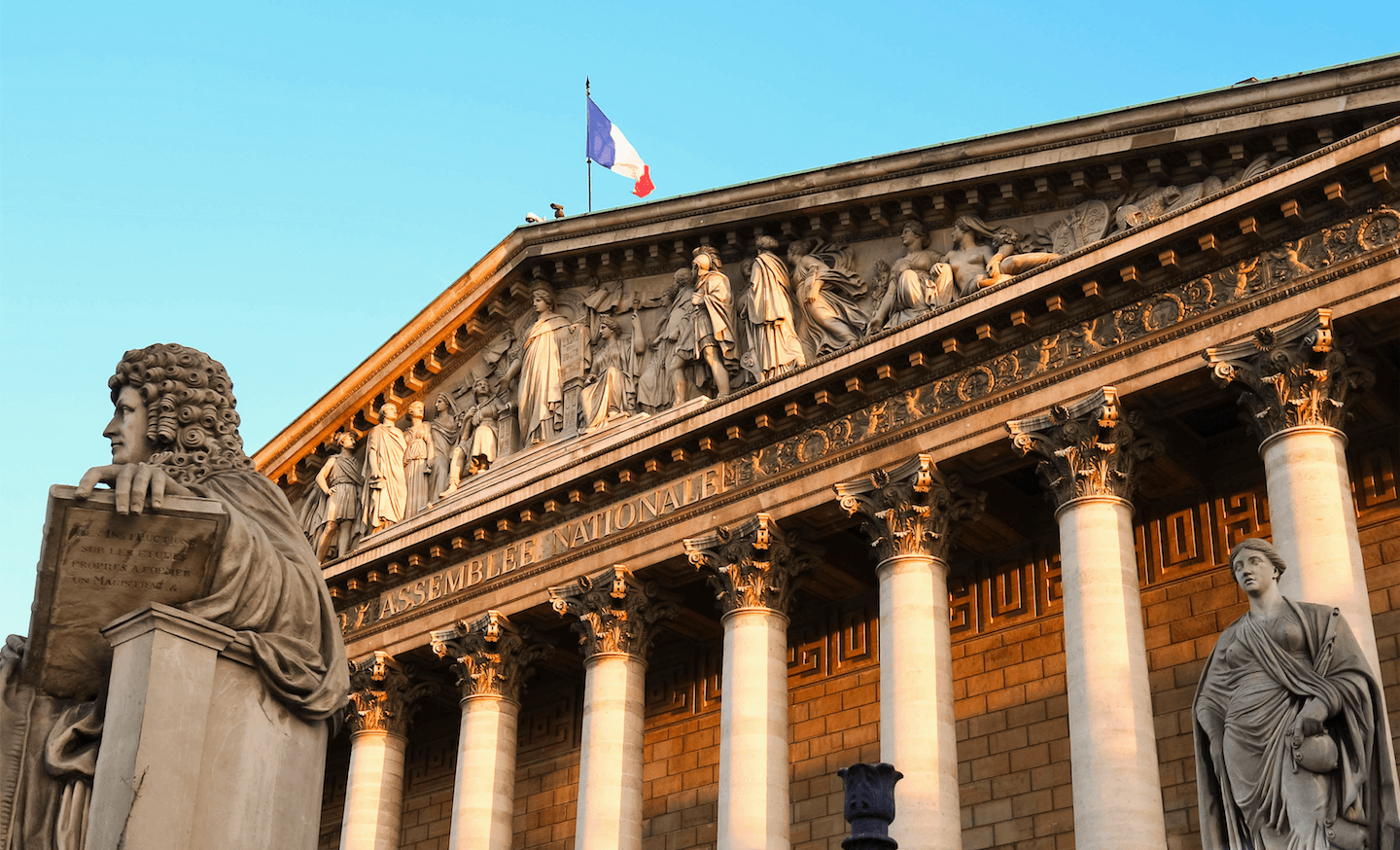
On Tuesday, October 14, 2025, Prime Minister Sébastien Lecornu announced during his policy address to the National Assembly the suspension of the 2023 pension reform until the 2027 presidential election. This significant concession, which maintains the retirement age at 62 years and 9 months instead of the planned 64 years, aims to avoid a vote of no confidence against his government. The Socialist Party, whose votes were crucial, immediately stated it would not support the no-confidence motion, thus ensuring the government's survival. This decision marks a substantial retreat on one of the hallmark reforms of Emmanuel Macron's second term.
A Political Announcement Under Intense Parliamentary Pressure
Appointed Prime Minister on October 10, 2025, by Emmanuel Macron, Sébastien Lecornu faced an unprecedented parliamentary equation since his government was formed on October 12. Two motions of no confidence were immediately filed, one by La France Insoumise and the other by the Rassemblement National, scheduled for review on Thursday, October 16, at 9 a.m. In a fragmented Parliament, the government’s fate hinged on a tight arithmetic where the 69 Socialist deputies held the key to the executive's survival.
For a motion of no confidence to pass, 289 votes are needed out of 577 deputies. According to counts established before the general policy speech, the declared opposition totaled 265 votes, 24 short of what was needed to overturn the government. Therefore, the Socialist Party's position was mathematically crucial. During his general policy statement delivered on Tuesday, October 14, at 3 p.m., Sébastien Lecornu opted to concede on pension reform, announcing at the podium that he would propose to Parliament this fall to suspend the 2023 reform until the presidential election.
The Prime Minister specified that no increase in the retirement age would occur from now until January 2028, as requested by the CFDT. Additionally, the insurance period would also be suspended and remain at 170 quarters until January 2028. This announcement immediately elicited applause from the Socialist ranks. Boris Vallaud, president of the Socialist and Affiliated Group, responded at the end of the day by stating that his group was betting on parliamentary debate and did not currently plan to censure the government. This political victory for the Socialists marks a turning point in managing the French institutional crisis.
Acknowledged Budget Costs and Necessary Compensations
The suspension of the pension reform has significant implications for public finances. Sébastien Lecornu estimated the cost of this measure at 400 million euros in 2026 and 1.8 billion euros in 2027 during a presentation to the deputies. The Prime Minister emphasized that this suspension should be offset by savings, stating that suspending for the sake of suspending was pointless and that ensuring the system's balance for future generations was necessary.
The initial 2023 reform, enacted under Élisabeth Borne's government, aimed to gradually raise the legal retirement age to 64 for those born from 1968 onwards. Thus, the 1964 generation, expected to see their retirement age delayed in the coming months, will have it frozen at 62 years and 9 months.
To financially offset this suspension, the government proposes organizing a conference on pensions and work in collaboration with social partners. Jean-Pierre Farandou, the new Labor Minister and former head of SNCF, quickly began reaching out to social and business partners starting Tuesday evening. Speaking on France 2's evening news, he suggested that in a pay-as-you-go system, working longer is almost inevitable as life expectancy increases, reminding viewers that there are more retirees than active workers.
This conference is intended to address the broader management of the French pension system and may deliver its initial conclusions by next spring. If the conference leads to an agreement, the government will incorporate the agreement into law. If not, it will be up to the presidential candidates to make their proposals and for the French people to decide.
Mixed Reactions from Employers and Unions
The announcement of the suspension of the pension reform has sparked strong and varied reactions in the economic world. The business lobby AFEP, which represents the 117 largest French companies, bluntly acknowledged on Tuesday the budget announcements, noting that besides the new increase in corporate taxation amounting to 6 billion euros, the presented directions undermined the improvement of public finances and the support for senior employment dynamics enabled by the pension reform adopted in 2023. AFEP lamented that these announcements were at odds with the priorities of large companies and would hinder their ability to invest, produce in France and internationally, support employment, and thus contribute to collective prosperity. The Medef, the leading representative employer organization, expressed great concern not only about the cost of governmental instability but also about the deteriorating French and international economic climate. On the side of small businesses, the U2P, representing local businesses largely unaffected by the fiscal equity measures, was less harsh, considering that nothing would be worse than prolonging the current instability. However, the organization assessed that the suspension of the pension reform was not good news for the country as it would worsen the drift in social accounts, and this decision should remain temporary. From the union side, the CGT stated in a release that the announced suspension was actually just a delay in its implementation by a few months, adding that the only worthwhile suspension was an immediate halt to the implementation of the pension reform at 62 years, 9 months, and 170 quarters. Gérald Darmanin, the Minister of Justice, admitted on LCI that it was a difficult yet necessary compromise in an Assembly where the presidential majority no longer exists, acknowledging that this setback was politically costly but emphasizing that the government's resignation would have been even more costly for France.
This content has been automatically translated using artificial intelligence. While we strive for accuracy, some nuances may differ from the original French version.


